
Risk Management Advisory
Successful projects do not eliminate risk; they manage it. Our role is to identify where risk exists, explain its implications, and support teams in addressing it early, when adjustments are typically more practical and cost-effective.

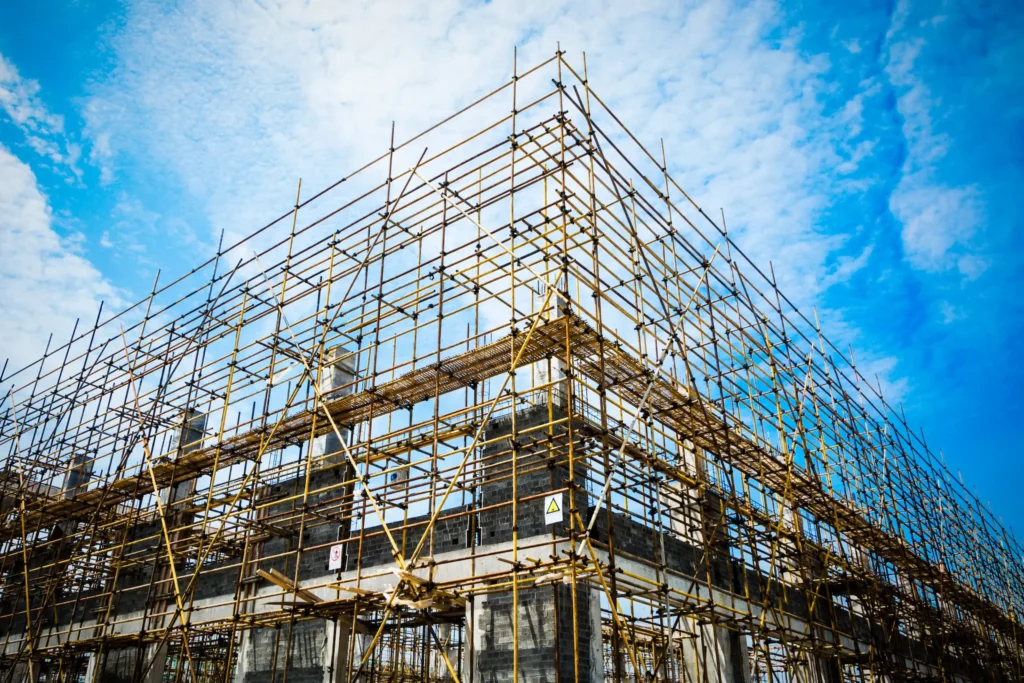


Technical Risk Management for New Construction Projects
DAI provides Risk Management Advisory services for developers and contractor teams seeking to reduce exposure, improve constructability, and address conditions that may lead to costly failures. Acting as a technical risk-management partner, we assess building systems, assemblies, and design decisions to support informed, defensible choices throughout the project lifecycle.
A Proactive Approach to Construction Risk
Construction risk most often emerges from coordination gaps, incomplete detailing, and misunderstood system interfaces—not from isolated mistakes.
Our advisory services focus on:
- Building envelope performance and system integration
- Life-safety and code-critical assemblies
- High-risk details, transitions, and interfaces
- Constructability and sequencing challenges
- Long-term durability and maintenance implications
By addressing these issues during design and construction, we support teams in reducing the likelihood of disputes, delays, and performance issues that often surface years later.
How We Support Project Teams
We integrate seamlessly with developer, architect, and contractor teams to provide independent, technically grounded insight.
Our Risk Management Advisory services include:
Technical Design Review
Evaluation of drawings, details, and specifications with a focus on performance, coordination, and risk exposure.
Assembly Integration Evaluation
Review of how systems work together—envelope, structure, MEP, and life-safety—at critical interfaces where failures commonly occur.
Supplemental Detailing
Development of targeted details to clarify intent, clarify gaps and reduce ambiguity where identified before construction.
Construction Administration Support
Ongoing technical support during construction to address emerging conditions, RFIs, and field changes while maintaining alignment with performance objectives.
Advisory & Issue Identification
Early identification of high-risk conditions with clear explanation of implications and mitigation options.

Vendor and Contractor Due Diligence: Evaluating Project Risk Exposure
Selecting the right vendors and contractors is one of the most consequential decisions in any construction project. Even the best-designed plans can unravel if partners lack the capacity, integrity, or resources to deliver as promised. Our due diligence process is designed to identify potential risks before contracts are signed—and to continue monitoring performance throughout the project lifecycle.
Comprehensive Pre-Qualification and Evaluation
We conduct in-depth reviews of prospective vendors and contractors to evaluate whether they meet the standards required for successful project delivery. Our due diligence process typically includes:
- Compliance and Legal History:
Review of regulatory records, litigation history, and compliance with industry standards to flag any past issues that might signal future risk. - Performance and Experience Verification:
Evaluation of prior project experience, technical expertise, safety record, and references to evaluate the contractor’s experience and capacity to execute work at the required quality and scale.
Integrated with Our Broader Risk Management Approach
Vendor and contractor due diligence is a core component of our risk management advisory services. When paired with our technical reviews and financial controls, it forms a robust framework for supporting structured risk oversight from start to finish.
When Risk Management Advisory Is Most Valuable
This service is particularly effective when engaged:
- During schematic design or design development
- Prior to permit or construction document completion
- At project kickoff or early construction phases
- On complex or high-density projects
- Where new materials, assemblies, or construction types are involved
Early involvement allows risk to be evaluated and addressed strategically—rather than reacting after issues emerge.
Designed for Developers and Contractors
We understand the pressures faced by development and construction teams: schedules, budgets, coordination, and accountability.
Our advisory services are structured to:
- Support informed decision-making
- Reduce the likelihood of downstream change orders and claims
- Improve clarity between design and construction
- Strengthen documentation and defensibility
- Support alignment between technical performance objectives and project goals
We provide insight without disrupting momentum.
Independent, Practical, and Field-Tested
As forensic architects, we bring a unique perspective to risk management—we routinely see how and why buildings fail. That experience informs our ability to identify vulnerabilities early and recommend strategies informed by real-world performance conditions.
Our guidance is:
- Independent and unbiased
- Grounded in building science and constructability
- Informed by field investigations and failure analysis
- Practical for implementation
This combination positions us to bridge the gap between theory and execution.
Why Domeier Architects
We are:
- Specialized expertise in building envelope and system performance
- Extensive experience across multi-family, commercial, and mixed-use projects
- Deep understanding of Type I, III, and V construction
- Trusted advisor to developers, contractors, insurers, and attorneys
- Demonstrated experience evaluating and managing risk exposure before it escalates into dispute or liability
We identify risk and support teams in managing it deliberately and strategically.
Risk Management Advisory
Talk to a Risk Management Advisor
Fill out the form below to schedule a free consultation.
By subscribing you agree to with our Privacy Policy
Build with Confidence
If you’re planning or constructing a project and want to reduce exposure, support performance objectives, and preserve long-term project value, Risk Management Advisory provides technical clarity to support informed project decisions.
FAQs
What is construction risk management, and why is it important?
Construction risk management is the process of identifying, assessing, and evaluating and evaluating and mitigating potential risks that could impact a project’s cost, schedule, quality, or safety. Effective risk management supports protection of your investment, reduces the likelihood of costly failures, and contributes to more predictable project delivery from design through construction.
How does DAI Risk Management Advisory differ from other services?
Our approach is highly technical and proactive. We focus on identifying risks early—especially those related to building systems, detailing, and coordination—so they can be addressed before they escalate into failures or disputes. We combine field-tested expertise with independent, unbiased insight to support informed decisions throughout the project lifecycle.
When should I engage a risk management advisory service?
Risk management is most effective when integrated early in the project, ideally during schematic design or before construction documents are finalized. Early involvement allows us to identify and address risks when changes are typically more cost-effective and feasible.
What types of risks do you help manage?
We address a broad range of risks, including:
- Technical and constructability issues
- Building envelope and system integration challenges
- Life-safety and code compliance
- Financial risks related to funds disbursement and controls
- Insurance and risk transfer needs
- Vendor and contractor reliability
- Specialized risks such as cyber liability and sustainability
Do you provide ongoing support during construction?
Yes. Our team provides ongoing technical and financial oversight during construction, addressing emerging issues, reviewing RFIs and field changes, and monitoring contractor performance to evaluate risk conditions as they develop.